Auxetica™
Structure
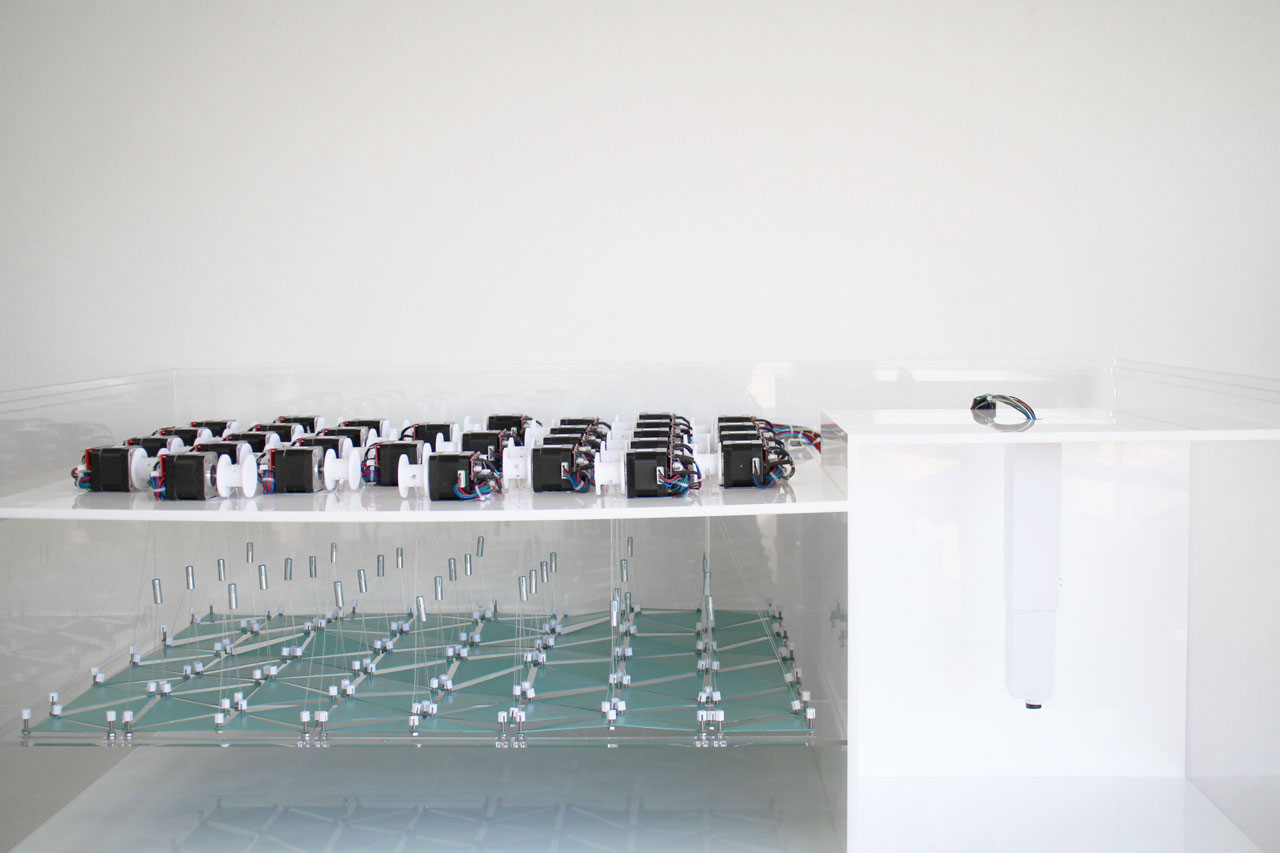
Panels, Cables, Frame, Spools, Electronics, Power Supply
Material
Aluminum, Stainless Steel, MDF, PLA
Finishing
Natural Anodised, Powder Coated, or Veneered
Standard Dimension
300mm x 300mm
Standard Thickness
1.5mm or 3mm
Mounting Mechanism (Panels)
Cable to Stepper Motor
Mounting Mechanism (Frame)
Anchors
Shapes
Equilateral Triangle
Toxicity Emission Test
EN 13986 : E1
Fire-Rated Test
EN 13501-1 : Class B, s1 d0
Designer
AntiCAD Pte. Ltd.
Auxetica™ a kinetic ceiling that reacts to human traffic. The kinetic ceiling is actuated with a microcontroller and a self-detecting camera module. The design of the ceiling utilises auxetic geometry to create a fabric-like stretch in a grid of inelastic panels. The triangles are pulled by cables and controlled by stepper motors.
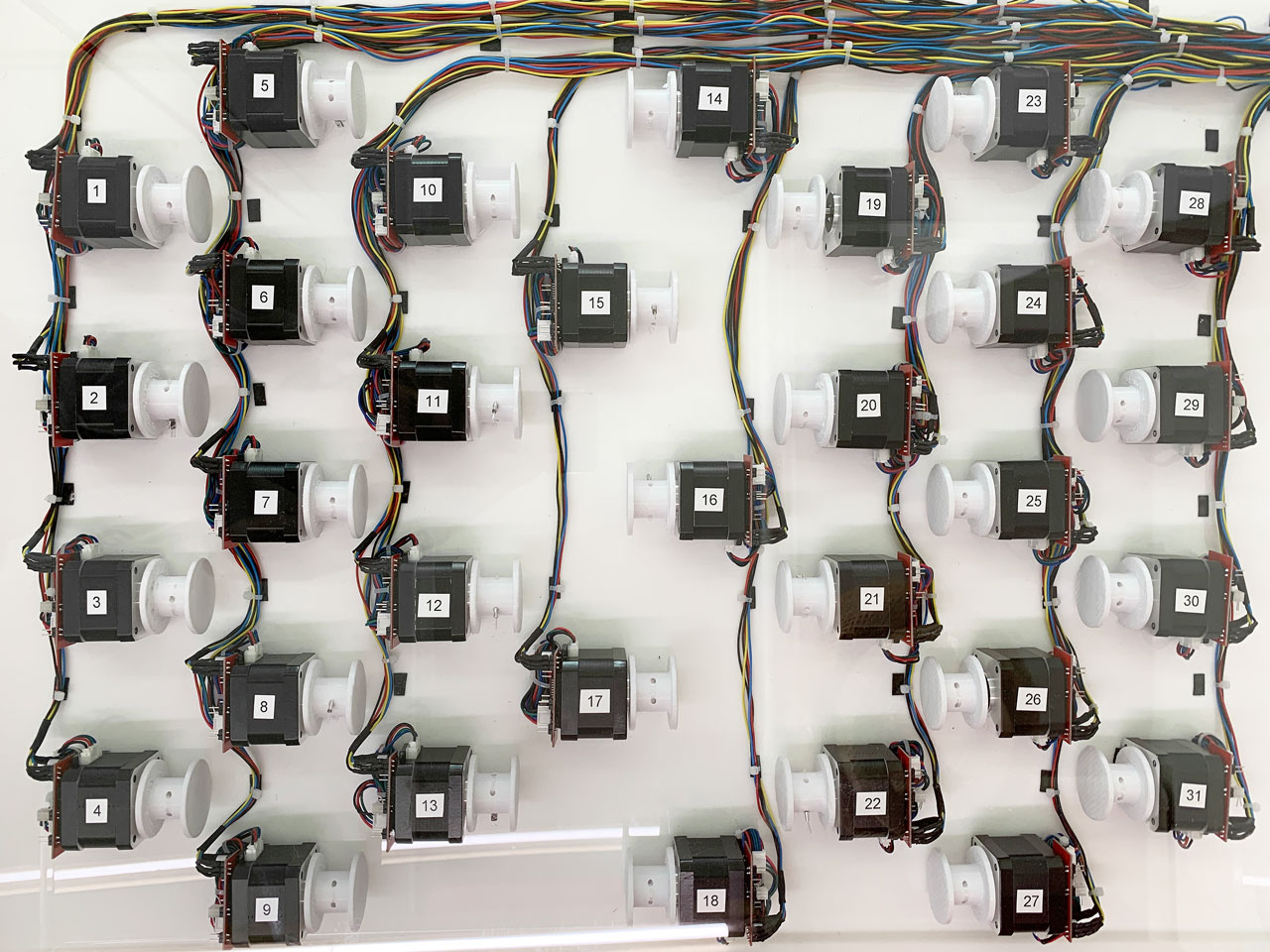
The stepper drivers act as the medium between the microcontroller and the stepper motors. They help to relay commands from the microcontroller to allow the stepper to move as desired. They are programmed to contour and follow traffic when humans walk under the ceiling – simply put, a ceiling that follows you.
Download Specification Sheet PDF
▼

AntiCAD is a product design company founded in 2017 and is currently headquartered in Singapore. The name AntiCAD is an antithesis to traditional CAD (Computer Aided Design). Parametric design is a process based on algorithmic thinking that enables the expression of parameters and rules that define the relationship between design intent and response.

Frequently Asked Questions
Auxetica™ is a kinetic ceiling system that reacts to human movement. It uses a grid of equilateral triangular panels pulled by cables and controlled by stepper motors, combined with a camera and microcontroller to adjust the ceiling in real time as people move underneath. This creates dynamic motion and interaction in interior architecture.
Auxetica™ incorporates parametric design principles — using algorithmic and computational logic to define relationships between components so that motion and form respond dynamically to input, such as human traffic. This approach leverages tools commonly used in Rhino 3D and Grasshopper Rhino workflows.
The kinetic ceiling combines aluminum, stainless steel, MDF and PLA components. Panels are connected to stepper motors and cables, with stepper drivers relaying commands from a microcontroller. This setup makes the ceiling responsive and adaptable based on human presence and movement.
Auxetica™ is ideal for public interiors, lobbies, galleries and experiential spaces where adaptive and interactive computational design enhances visitor engagement. The kinetic ceiling can serve both aesthetic and functional roles in modern installations.
Designing a system like Auxetica™ benefits from Rhino 3D modeling and Grasshopper tutorials because these tools enable precise control of parametric geometry and motion logic. By parametrically defining panel behavior and linkage systems, designers can simulate and optimize kinetic performance before fabrication.